




B2B E-Commerce and Dealer Portals: Moving Wholesale Online
Dealer orders run by phone, chat and Excel cause errors and lost time. See how B2B e-commerce differs from retail and what a dealer portal offers you.

In many wholesale businesses, dealer orders are still taken by phone, messaging apps or Excel files. This works while small, but as the number of dealers grows, misunderstood product codes, outdated price lists and lost orders waste time and trust. B2B e-commerce and a dealer portal bring this scattered work into one system.
How B2B differs from retail e-commerce
In retail e-commerce everyone sees the same price and pays by card. In B2B the relationship is continuing and the rules differ:
- Prices and discounts specific to each dealer or dealer group.
- Account balance, payment terms and credit limit.
- Carton, pallet or minimum order quantity rules.
- Prices hidden until login.
- Orders needing approval and authorized users.
What a dealer portal offers
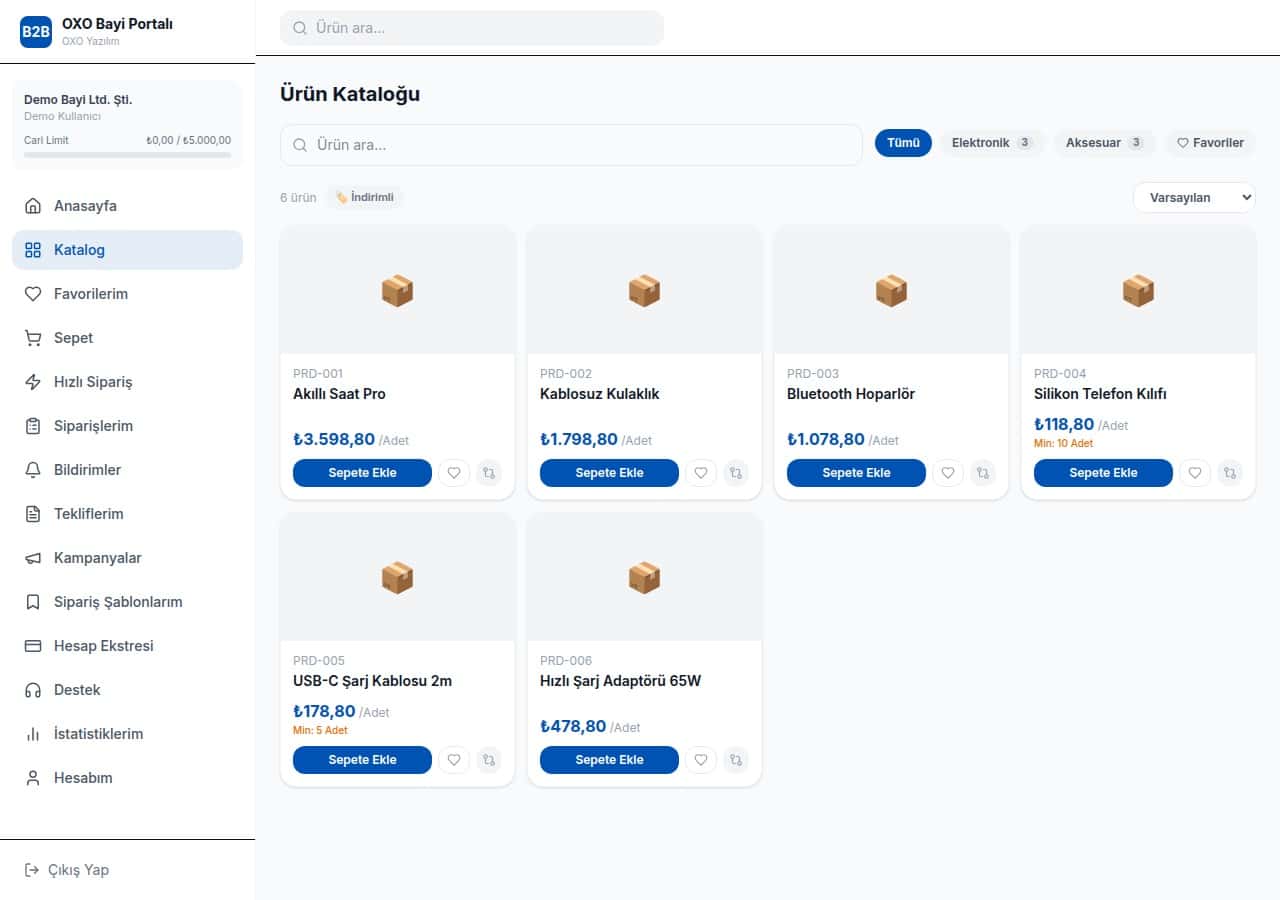
When a dealer logs in with their own account they see their own price list and live stock, and create an order in minutes. They can repeat past orders and review invoice and statement information. On the business side, incoming orders gather in one panel and repetitive phone exchanges decrease.
Integration with accounting and ERP
A B2B portal's value depends on talking to back-end systems. If stock, price and account balance come from your accounting or ERP program, dealers always see current data. Transferring orders automatically to your accounting program removes double entry. Integration options should be clarified at the start of the project.
Dealer adoption: the most overlooked topic
A technically perfect portal is useless if dealers do not use it. Highlight what makes the dealer's work easier: fast ordering, current prices, repeating past orders. Piloting with a few dealers and collecting feedback smooths the transition. If necessary, keep phone ordering in parallel for a while.
Security and authorization
Prices and account details are sensitive data. User roles, a strong password policy, activity logs and protection from unauthorized access should be planned from the start.
Clarifying these questions before the project starts shortens the process:
- How many dealers are there and how are they grouped (price, terms, region)?
- Which program do price and stock information come from?
- Who approves orders and under what conditions?
- Which documents does the dealer want to see with an order (invoice, delivery note, statement)?
Instead of trying to build every feature in the first version, starting with core functions such as order intake, dealer-specific pricing and order history lets you progress based on feedback.
Conclusion
A dealer portal is a business process that speeds up wholesale while reducing errors; it is not just a website. To map your workflow together and build a structure tailored to your needs, see our enterprise software service or talk to us.